• Skip to main content
  • Skip to secondary navigation
  • Skip to primary sidebar

Philippa Ballantine - Author

Award-winning Author of fantasy, science fiction, and steampunk

  • About
    • Contact Page
  • Works
    • Alien
    • The Ministry of Peculiar Occurrences
    • Verity Fitzroy and the Ministry Seven
    • The Books of the Order
    • The Chronicles of Art
    • The Shifted World
    • Anthologies and Stand Alones
    • Podcasts
  • Blog
  • Pip’s Shop
  • Amazon
  • Facebook
  • Instagram
  • TikTok

admin

Rumination on Ten Years of Podcasting

Ten years ago this month I released my very first podcast episode. This realization struck me last Christmas, and I was once again reminded, damn time flies.

Weaver's WebWeaver’s Web was my first novel that I had finished, and I had sold it to a small Australian ebook publish in 2002. Ebooks back then were…well they weren’t a thing, and the amount of money I made in a year was perhaps enough to buy a cup of coffee.

Then the second book I sold was Chasing the Bard, to DragonMoon Press, and that was when everything  changed, and not just writing wise. I was soon corresponding with another author, Tee Morris, and it was he that convinced me to get into podcasting. So I took my first book that wasn’t doing anything, bought myself a microphone, and leapt into it.

Since that moment I have recorded and released four complete novels as podcasts, produced nearing seventy short stories, and done three chat-style podcasts. I’ve learned to work with guest voices, wrangle sound effects and bed music, and mix it all into an mp3.

But it is far more than the technical strides I have made over these last ten years. A lot more. In podcasting I found an online home. It has given me a voice, a particularly New Zealand voice, on the internet. Along the way I made friends. So many friends. More than I had in New Zealand, and in places I had never even heard of. I remember getting an email from Estonia about how much a listener had enjoyed Chasing the Bard. These were the kind of things I could never have imagined happening when I tentatively posted my first episode of Weaver’s Web.

It also gave me that necessary but required thing, a platform. When I got the first nibbles from Ace publishing about Geist, they wanted to know my author platform, my numbers, and podcasting was definitely one of those things. All together they counted, and Ace took a chance on me and my writing.

Podcasting has come a long way in those ten years, and yet in someways is still exactly the same. Big business has moved into the sphere and many of the faces I used to see at the top of the podcasting category in iTunes have been pushed further down. However, the success of podcasts like Welcome to Nightvale do show that there is still plenty of room for great story-telling. And even better, a lot of the people I listened to are still podcasting in some form or other.

I am sure that podcasting has changed a lot of lives, not just mine.

In short, I don’t know how my life would have gone without podcasting. I wouldn’t be living in America, a mother, or with half of what I have done accomplished—if anything. I look back on that first choice to pick up a microphone as one of the important pivot points of my life.

And most of all, I have no plans to stop podcasting anytime soon.

Author Adaptation instead of Extinction

There’s a lot of negative commentary out there for authors to digest right now.

The Authors’ Licensing and Collecting Society out of the UK, reported in 2014 that writers earnings had dropped 29% from 2005. Major publishing houses are being called on by the Society of Authors, to do things like release rights that they don’t actively exploit (like ebook and foreign), to stop putting crippling restrictions on authors (like non compete clauses) and to give authors more of a cut of ebooks.

Philip Pullman, the author of His Dark Materials series, called authors ‘an endangered species’.

Terrifying language.

All of these changes would be lovely, but are we likely to see them from major publishing houses in the near future? I think not. Big publishing is a business first and foremost, and the only way businesses are ever forced to change, is when they absolutely, cannot choose any other path.

So what are authors to do while we wait for that major sea change to be forced on publishing?

I still believe hybrid is the way. Use the good bits from major houses, but also pursue your own publication goals.

It’s not easy. Many authors have become used to simply writing, and independent publishing is hard work. The author has to arrange covers, editing, launch dates, and then do all the backend work like crunching the numbers, paying contractors, and also the taxman.

Some authors simply don’t want to do that, and for the largest sellers they might be able to manage to ignore it. However, every other author below that level is going to have to make some hard decisions, especially as major publishing becomes more and more risk adverse.

So those that will survive are the ones that see the truck coming and move into a different lane.

In short, authors have to take control of their own businesses. They have to put aside the idea that big publishing is the only way they will be saved, and become instead entrepreneurs. Certainly, pursue contracts with major houses, keep pitching them ideas, but don’t just lay down and die when they fall on deaf ears.

Right now, I am trying to walk that walk myself. This year I will have four books (two co-written with Tee Morris) coming out, and we will be in charge of them. Everything that happens will be because of our work both on the page, and behind the scenes.

I’m choosing to make exciting, rather than terrifying.

MoveI have upped my daily writing goal, and aiming myself in a more business like direction. I’ve learned new skills in preparation. Over the years I’ve made friends and contacts who have skills I don’t. I know photographers, book designers, editors, beta readers and book bloggers.

Yes it is scary standing out there, but I am far from alone.

So here’s my tips for being a hybrid, and if you have any to add, please throw them into the comments section. Although we generally write by ourselves, it doesn’t mean we can’t share our ideas as a community.

Maybe we are endangered, but we’re not extinct yet!

Independent

  • Practice Writing faster. The best way to build an audience is to have multiple titles out there; that means you have to write as much as you can. To that end use brackets [] around facts you don’t know, or names you’ve forgotten in that moment. Then in the editing process you can go back and check. For the moment, keep going. Set that daily word count and hit it!
  • Write series. Readers love series, so give them what they like. Maybe the first one will not pull in great sales, but build on it. Keep going, and the quicker you can put them out the better. Big houses might make you wait 18 months for your book to be produced, but the joy of indie publishing is you can be much more swift and nimble.
  • Be professional. Set yourself a publication schedule. Work with professionals like editors and cover designers. Act like the person you would like to be is pretty good general advice for life, but also works here.

Publishing Houses

  • Write what you enjoy and are passionate about. Explore the limits and find an editor who will love your work. Maybe that area you love isn’t trending now, but what publishers are looking for—what is hot right now—changes all the time.
  • Keep as many rights as you can. Audio and foreign rights are cash sitting on the table. If you do sell them to the print publisher, then make sure they exercise them. Have it in the contract if they are not used by a set time, then they revert back to you. That way if they don’t use those rights then you can produce them yourself (hey, remember you’re a hybrid). Don’t leave that money just sitting there.

The Importance of Pants – Seven tips for writers working from home

Since last week I talked about Habitica and how it has helped me reinvigorate my to-do list and become more productive, I thought I’d go a bit further and talk about things I have learned being a full-time writer.

Pants RequiredBack in April 2010 I quit my full-time librarian job which I loved, and took the leap into writing as my career. My first New York published book Geist was coming in October, and I decided it was time to ‘back myself’. It was terrifying and invigorating.
That first day I didn’t have to rush to work, I slept in. However once I got up and realized this was it, I’m not going to lie, it was weird and very unformed.

When you are in an office there is someone telling you want needs to be done, reminding you if you are slacking off, and there is a rhythm to life in an office. It took me a little while to work out that I was now responsible for all of those things.

So here are some of the things I have learned in that time.

  1. Pants – Put them on. Certainly, it might seem like a good idea to sit in your PJs all day, and sure you can do that on the odd occasion, but putting on your pants/trousers every day, and getting ready to face the day gets you in the work mood. Without it you might just watch TV and eat ice cream. Remember this is your job, you need to take it seriously. Pants are required.
  2. Schedule – To take the place of the boss, you need to become the boss. Police yourself. Give yourself a weekly schedule and deadlines, just like you had at work. Try not to remember that if you don’t hit them there is no senior manager to yell at you. Without some sort of structure you are going to fall off the rails hard, and then the only person to blame…well unfortunately that is you. Are you sensing a theme here?
  3. Distractions – Sure that floor needs to be mopped, there’s dust on the mantel, and the bathroom needs a scrub. Facebook is tempting you with memes, hilarious cat videos, and your friends latest crisis/adventure/success. Admit these distractions are going to be there and learn to manage them. Sure you need to keep your house clean, but limit it. I do a chore a day, just half an hour or so, and it is scheduled, so that my vacuuming the floor doesn’t turn into an all day scrubfest…
  4. Eat and Move – seems simple doesn’t it. But sometimes while you are in the depths of writing, or creating a cover you might forget to move your butt out of the seat. On my Habitica I have a habit, called Move After Writing. After a thousand words, I get up and circle the house a few times. Luckily only the cats are there to see me do it. It gets the blood flowing (remember your brain needs blood!) and it also is just good for your health.
  5. Eat properly. One of the advantages of working from home is that you can do that. You have access to a kitchen, use it and keep that brain supplied with food as well as blood.
  6. Have a space for writing – make a spot for you to write undisturbed. At first I thought I could write anywhere, on the couch in front of the TV, by the kitchen counter, balancing on one foot. You get the idea. Turns out I need a flat surface and music in my ears to get words out. Editing I can do anywhere, but for writing I either sit at the dining room table with my headphones on, or down in our office, with a cat sprawled next to me. Find the location(s) that work best for you and get in the habit of using it. It also acts as a trigger, to remind you to get working.
  7. Get outside – after awhile the house is not going to be enough. So get out of it now and then. Go for a walk. Join a nearby writers group, or start one up. It doesn’t have to be everyday, but once a week it is nice to see a human during sunlight hours. Don’t forget when you are creating things, you can learn from humans. You write about them after all.Oh and here is a bonus tip, that I am still working on. Have a weekend – OK, sure maybe not every weekend. Like most small business owners a weekend might seem a luxury, but like going outside, a weekend is a refresher. Spending time with the family, going further afield is the reason we work right? Even if we love what we do. This year I realized I had been working most weekends, sometimes all weekend. So I adjusted my schedule (see above) so I get more word count in during the weekdays, and have some mental and physical downtime Saturday and Sunday

Those are the things I have learned since 2010, but if you have any more tips and advice for those working from home, please post them in the comments.

Habits and Habitica

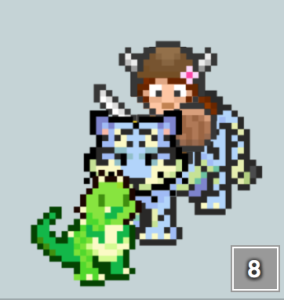
Author riding a tigerThe to-do list. The bane of my existence. Seriously I would use whiteboards and markers for those long term goals, which I thought worked pretty well. However, it was the day-to-day items that would pile up; little things on social media, around the house, and writing tasks.

The feeling of being snowed under and losing control was something I really wanted to get under control in 2016. (Not resolutions, goals!)

I have at various times tried paper, and I know a lot of people swear by pretty, fancy day planners. However I have tried those myself, and while I always start off with a bang, soon I forget where I left it, or I forget to write in it. Then next thing you know it is tucked in the bookshelf, mocking me with my failure. The one thing I use all the time, and always have on hand is my laptop. I write on it, bank on it, chat with friends on it, and yes…check Facebook on it. Sorry paper, I am an electronic girl at heart.

So the our good friends Piper J Drake and Matthew Drake introduced us to Habitica. Now if you are or were a roleplaying geek, this will hit you right in the sweet spot, and maybe help you get a little more organized.

Habitica is both available online and as an app for Android and iPhone. You create an avatar of yourself, and then add Habits, Dailies and To-Dos. Each one that you tick off you earn gold and experience points for. Soon you are upgrading your armor, finding pets, and eventually getting yourself a mount.

This has replaced my electronic sticky notes. I took what I do on certain days, and turned those into dailies. For example writing a blogpost for this site is something I do on a Thursday. You pick a difficulty level, can add notes, and mark which days you want this daily to show up. Watch out though, if you don’t do a daily it will take away health points…and your avatar can die in Habitica!

Habits are the things you want to do or not do. Maybe you want to drink more water, every time you to as a plus habit you get experience. Then again, maybe you want to train yourself out of eating junk food, then you make that a minus. If you do that you lose health. I’ve gradually added to habits to tweak myself into walking between writing to get myself out of the chair now and then.

Then there are the to-dos. You can add dates to get things done, assign difficultly levels, and break down large projects into smaller check lists. Overtime you knock one off, you get gold and experience. Unlike Dailies, you won’t lose health on to-dos.

Habits, Dailies and To-Dos can have tags added, so you can break things down into projects. I have created tags like ‘housework’ ‘social media’ ‘Kickstarter’. Very helpful for keeping track of where you are in different parts of your life.

Not only that but you can also find a social aspect. You can chat in the Tavern, join a guild, create challenges others can join you on, or my particular favorite, join a party. When you are in a party you fight monsters together (each tick off you make counts as an attack on the beast), and when they are defeated share loot. However, beware if someone doesn’t complete their dailies everyone takes a hit on their health. So far our party has destroyed the Basi-List and the Laundromancer.

I am up to week three with this system, and I am already Level 8…soon I will be able to chose a career path like mage or rogue…that is enough to keep my on track.

Also you can ride a blue cotton candy tiger. Who wouldn’t want to do that?

The Chameleon Takes His Leave

David Bowie passed away yesterday. You’ve probably read the news that cancer took him—just like it has taken so many bright stars. He was, in his later years incredibly private, happy to live with his wife and daughter in New York, but he left us one last album as a parting gift.

I can remember when Bowie came into my life, and I can feel the thread of his influence running through it, like one of those beautiful and bizarre melodies he made. I even wrote a blogpost about how his creativity, inspired me, and  what lessons fellow creatives can take from his life. Go read it if you need a lift, or a kick in the  pants.

This time, I wanted to share my personal memories.

What’s That Feeling?
Like most women in the 1980s, I watched Labyrinth and put myself in Sarah’s place. I had a little more connection with her than most. I was fifteen years old, and I too had a younger brother that might have been Toby. David Bowie was an eye-opener. Here was his wild haired man, who could manipulate glass spheres, steal babies, and sing so beautiful you might just forget about the baby. He also had this air of knowledge and control, that to a teenage girl was intoxicating.
I admit it, Bowie had my attention.

Not Like the Others
Then as I went through school, everyone was listening to Duran Duran, A-Ha, and I was listening to Bowie. I would walk everywhere, with Ziggy in my ears, blaring from my Walkman. Gradually I learned it was OK to be different, and to make your own path. That was a powerful message to a teenager, and I know there must have been thousands of people just like me who got that same thing from Bowie’s songs. Changes was the anthem for what I was feeling at that time, but then so was Rebel, Rebel.

Unable to see Bowie
Then there was the time Bowie came to Auckland, New Zealand. I was in Wellington, I was sixteen, and my Mum wouldn’t let me go. Seriously, I thought, they hate me! Of course, his concert was on a Sunday, my English exam for School Certificate was on the Monday. Now, as a mother myself I totally agree with my Mum, back then it made no sense. I contemplated in my head jumping a train, and riding it all the way to Auckland. I didn’t, and I learned a lesson; life isn’t fair, and sometimes you just have to cope with that. Waiting was all I had.

The rewards of a little age
It was years, years and years until I had another chance, but this time I didn’t need a train. Bowie came to Wellington, and apart from listening to him sing, he also taught another lesson to me. Wellington wasn’t kind that night. She lashed the open air stadium where he was playing with rain, lots and lots of rain. Bowie however, played on. Roadies ran out and mopped the stage, and he sang on. He didn’t huddle, instead he strode out onto the catwalk, rain pouring down him, and singing. He gave up comfort, and safety (heck he could have broken a hip out there) to get the job done. He was a professional, and he sucked it up to get it done. He was magnificent.
I sat there, soaked to the skin, and cried in the rain.Bowie's eyes

Now he is gone. I said to my husband this morning, “I’ve never lived in a world without David Bowie.”

He looked at me and smiled. “Baby,” he said, “There will never be a world without David Bowie. We still have everything he did.”

And when it comes to it, we all have to leave this world, but at least Bowie left it with more beauty and creativity than it had before.

Thank you for that David Jones…oh and Tesla too…

« Previous Page
Next Page »

Primary Sidebar